
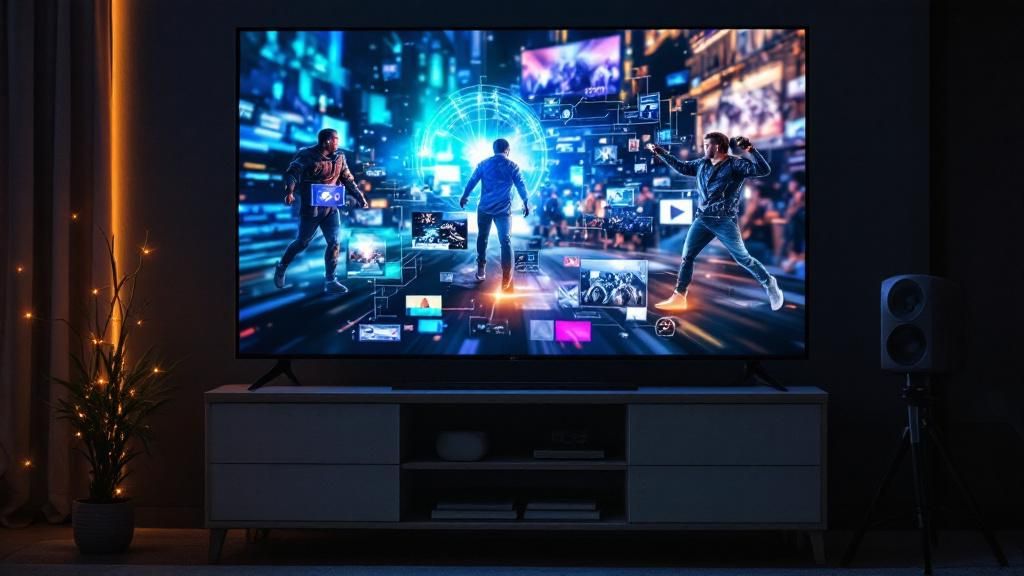
The television landscape has undergone a seismic shift. Once ruled by linear programming and scheduled content, the medium now bows to on-demand streaming platforms that have radically reshaped how millions view material. As traditional broadcasters experience audience erosion, services like Netflix, Amazon Prime, and Disney+ have become cultural powerhouses. This article examines the sweeping changes reshaping entertainment consumption, examining how on-demand services’ convenience and extensive catalogues are transforming audience engagement whilst leaving conventional television scrambling to adapt.
The Emergence of On-Demand Entertainment
The emergence of on-demand streaming has reshaped viewer expectations and viewing habits throughout the UK and worldwide. Audiences now value convenience, requiring the ability to watch content whenever and wherever they choose, rather than adhering to traditional time slots. This significant change has empowered consumers to tailor their own viewing choosing from comprehensive collections covering diverse genres and global content. Video services capitalise on this preference for independence, delivering viewers unparalleled choice over their entertainment choices, fundamentally challenging the conventional broadcast television structure.
The convenience factor cannot be understated in understanding the rapid expansion of streaming. Without commercial interruptions or scheduling constraints, viewers enjoy seamless viewing, especially attractive for watching full seasons consecutively in succession. This barrier-free availability has fostered new viewing habits, notably within Gen Z and millennial viewers who have grown up without traditional broadcast television as their principal viewing medium. The abundance of smartphones and tablets and improved broadband infrastructure has substantially quickened this shift, enabling seamless streaming across multiple platforms and locations simultaneously.
Shifting Consumer Preferences and Consumption Habits
The shift from traditional broadcasting to streaming platforms demonstrates a significant transformation in how people choose entertainment consumption. Today’s viewers increasingly favour platforms offering more control over what, when, and where they view content. This change goes beyond mere convenience; it represents a shift across generations in views on media accessibility. Generation Z and younger viewers, in particular, have been raised on on-demand content as the default, making linear television programming feel ever more obsolete and restrictive to their viewing preferences.
Adaptability and Ease
Streaming platforms have reshaped how audiences watch content by eliminating the restrictions of broadcast schedules entirely. Subscribers can now pause, rewind, and resume content at a time that suits them, accommodating busy modern lifestyles. This freedom covers binge-watching entire series in quick succession or distributing episodes across weeks, giving audiences total freedom over their consumption patterns. The capability to retrieve programming across multiple devices—smartphones, tablets, laptops, and televisions—additionally boosts ease of use, enabling users to keep watching without interruption no matter where they are or what they’re doing.
The ease of access has proven particularly appealing to busy working professionals and households juggling multiple commitments. Rather than coordinating viewing around fixed broadcast times, subscribers benefit from remarkable freedom in fitting entertainment into their daily routines. This shift has substantially disrupted traditional television’s expectation that viewers would organise their evenings around scheduled programming. Consequently, streaming services have gained considerable market position by positioning themselves as solutions designed for contemporary lifestyles, where control and flexibility represent paramount considerations for consumers.
Diverse Content and Tailored Experience
Streaming platforms stand out for providing extensive catalogues of material that cater to varied tastes and demographics concurrently. Unlike conventional television networks restricted by programming schedules, these platforms maintain extensive catalogues covering various genres and cultural viewpoints. Complex algorithmic models analyse user behaviour data to suggest personalised content selections, producing bespoke entertainment experiences for each viewer. This technological sophistication permits platforms to reach specialist viewers successfully, offering focused programming that traditional television judged economically unfeasible.
Tailoring technology have established themselves as vital to streaming services’ competitive advantage, perpetually refining user preferences to enhance recommendations. This data-driven approach means audiences discover content precisely matched to their viewing history, cutting down browsing time for suitable programmes. Furthermore, streaming platforms commit substantial resources to original productions presenting underrepresented creators and tales traditionally overlooked on mainstream television. By integrating comprehensive collections with smart content selection, these platforms provide genuinely personalised viewing experiences that change and progress with viewer interests, fundamentally differentiating them from mainstream broadcasting’s one-size-fits-all programming approach.
Influence on Traditional Broadcasting and Future Prospects
Traditional broadcasters encounter significant difficulties as advertising revenues fall and viewership fragmentation increases rapidly. Major networks have seen considerable viewer loss, notably within younger demographics who gravitate towards streaming’s adaptability. This fundamental shift has forced established organisations to reconsider their operational strategies fundamentally. Many legacy broadcasters now run their own online channels, striving to compete directly with tech-native players. However, the transition remains expensive and intricate, demanding considerable resources whilst sustaining traditional broadcast operations in parallel.
The coming picture points to coexistence rather than complete displacement of traditional television. Mixed viewing habits are developing, where consumers access both streaming services and conventional broadcasts based on programme genre and access options. Sporting content and real-time broadcasts continue as bastions for linear television, offering real-time engagement that digital platforms struggle to duplicate. Yet, younger generations increasingly expect on-demand access to all content, indicating traditional linear television’s relevance will continue diminishing gradually as demographic shifts progress.
Industry consolidation and strategic partnerships will likely define broadcasting’s evolution. Successful broadcasters are embracing digital advancement, funding bespoke programming creation, and building sophisticated recommendation algorithms. The sector’s viability depends upon grasping shifting audience demands and delivering personalised viewing experiences. Ultimately, streaming services have permanently transformed audience expectations, establishing on-demand access as the industry standard rather than a passing trend, radically transforming television’s future.
